
Newly Swissed Online Magazine

7 Interesting Facts about Swiss Banknotes: Design and Security Features

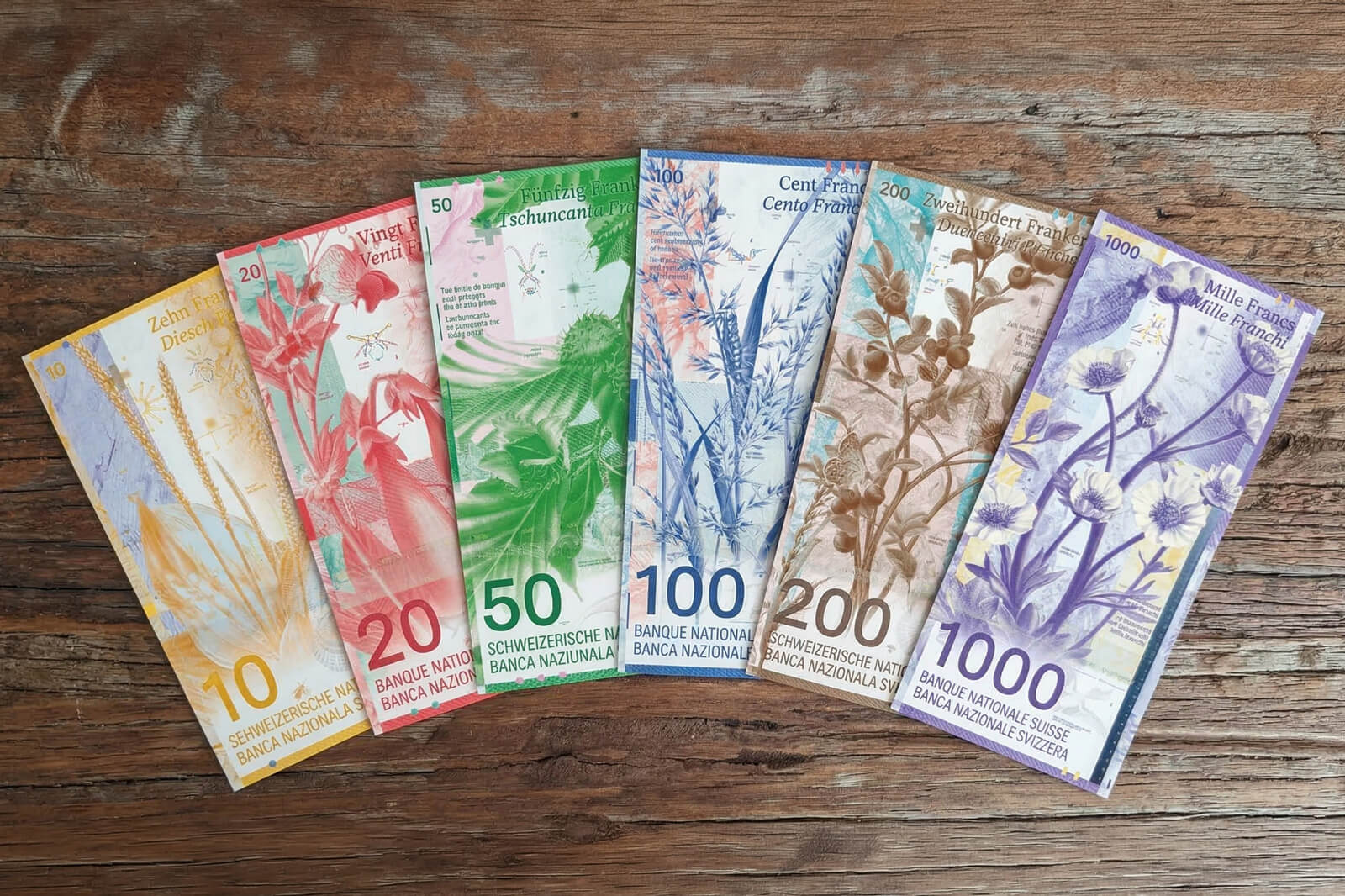
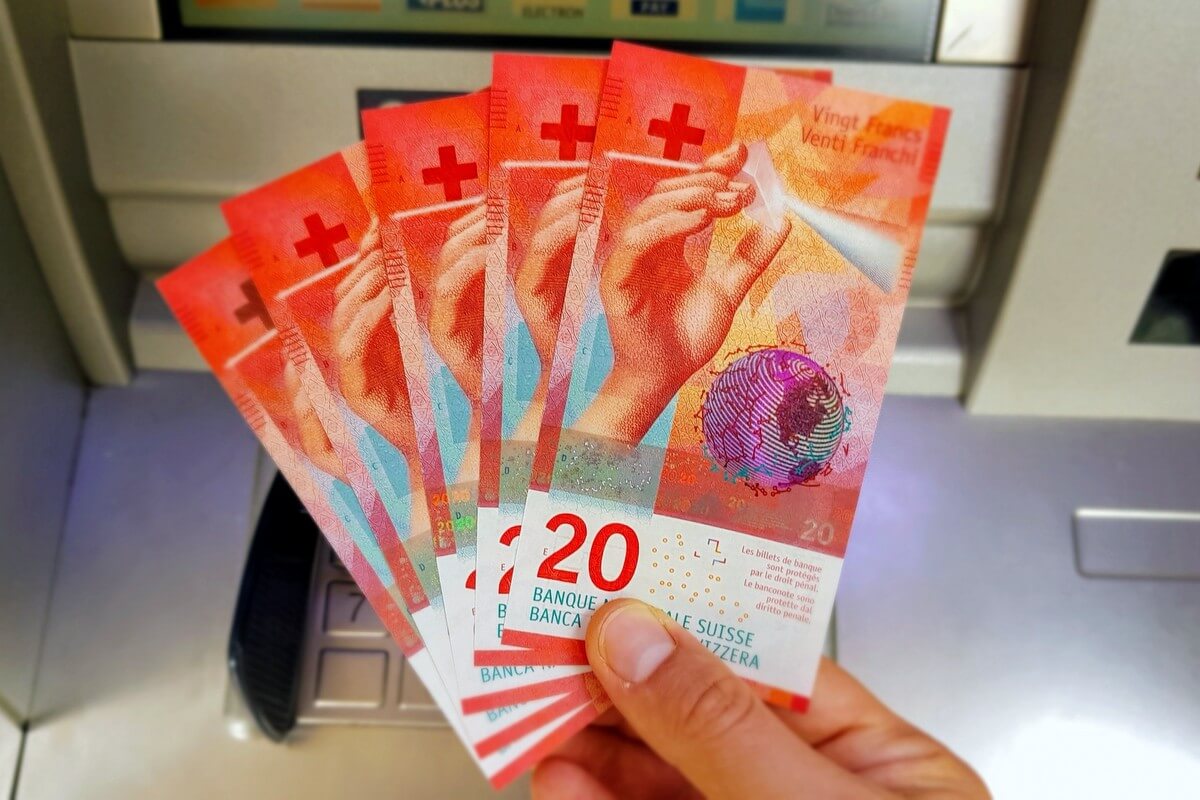
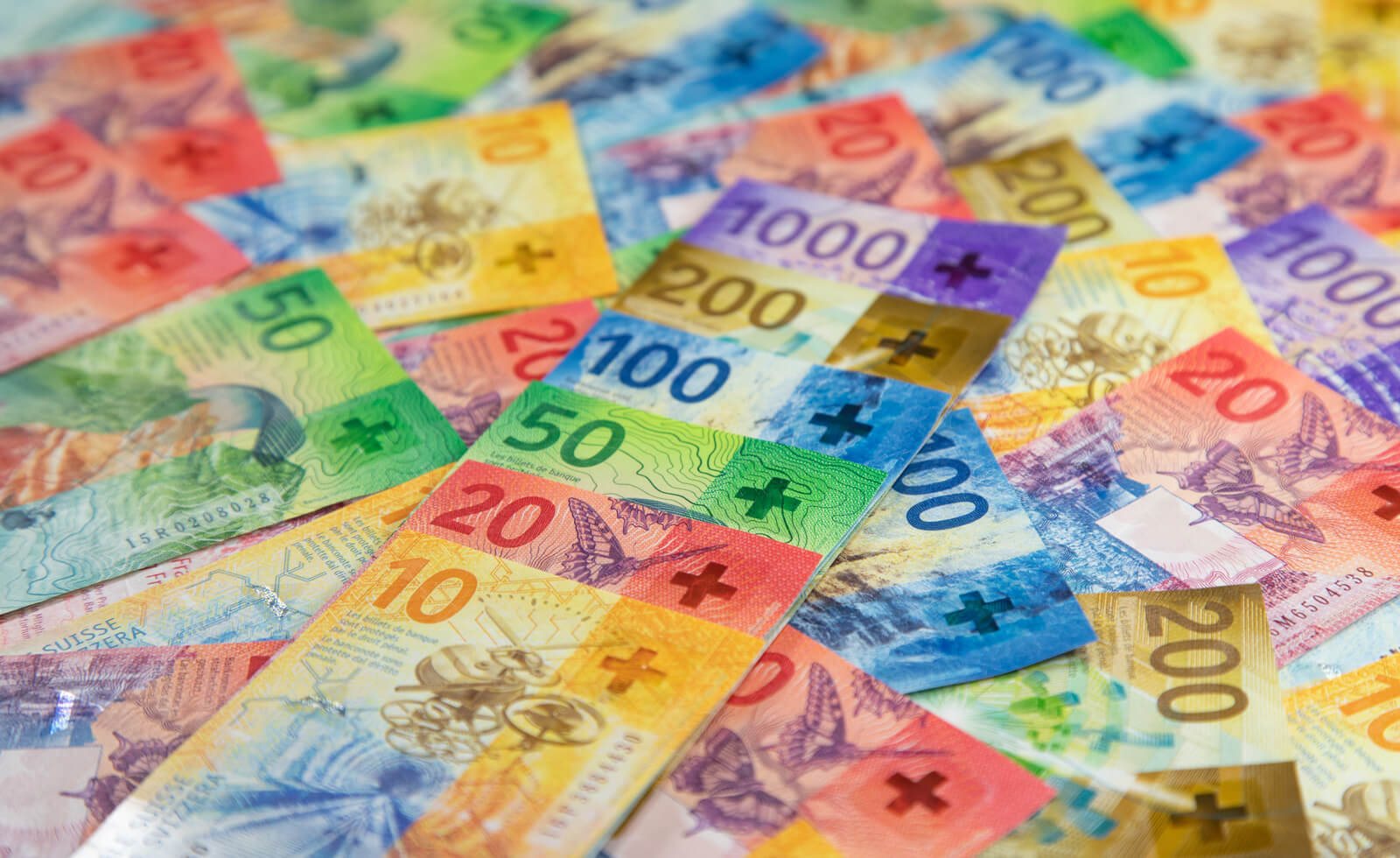
Switzerland abandoned human portraits on its banknotes. Instead of presidents and writers, you get butterflies, snow crystals, mountain landscapes, and slalom racers.

It was a bold call, and it worked.

The current ninth series, launched between 2016 and 2019, is not only visually striking. It is also one of the most security-rich sets of banknotes ever produced.

I wrote this guide to showcase what makes Swiss banknotes quite special, and why they are unique in the world.
Interesting Facts about Swiss Banknotes

How the Current Swiss Banknotes Came to Be

The Swiss National Bank launched a design competition for the new series back in 2005. The winning entry came from designer Manuel Krebs.

It featured cells and embryos, which created quite a loud public response.

The SNB then revised its decision and went with the second-place design instead: a concept by Zurich graphic artist Manuela Pfrunder, which became the ninth series we use today.

The color scheme was kept identical to the previous series to help people identify denominations at a glance. The new notes were made slightly smaller than their predecessors. And the design moved away from portraits of people entirely - the first Swiss series to do so.

As of 2026, we are still using the ninth generation of banknotes in Swiss history. The first series launched in 1907, with the typical lifespan of a Swiss banknote series being 15 to 20 years.

If you're interested to learn more about the Swiss coins in your pocket, some of which look almost identical to coins from the 1870s, check out my other guide:
Swiss Money: Coins, Banknotes, and Fascinating Facts
Group Gifts in Switzerland - Old Cashier Machine

7 Interesting Facts About Swiss Banknotes

The First Design Winner Was Too Radical for the Public

As mentioned, the SNB's original competition winner Manuel Krebs submitted designs featuring cells and embryos. Sure, this was a bold take on the human body and growth. But after all that public opposition, the SNB overruled the jury's first choice and commissioned second-place designer Manuela Pfrunder instead. Her designs, featuring abstract Swiss landscapes and natural motifs, became the notes you use today.

Humans Were Replaced by Nature

While the US was debating which historical figure to put on the 10-dollar bill, Switzerland dropped portraits altogether. The current notes feature mountain landscapes, butterflies, snow crystals, and abstract geometric forms.

The 10-franc note has slalom skiers. And the 50-franc note has climbers. Nature and motion replaced faces and busts. It is a distinctive choice, and one that the new tenth series will continue in the 2030s, focusing on Swiss altitudes, plants, and public transport.

Swiss Banknotes Are Remarkably Hard to Counterfeit

Only 1 in 100,000 Swiss banknotes in circulation is counterfeit. Compare that to:

1 in 20,000 for euros
1 in 10,000 for US dollars
1 in 3,333 for British pounds

That ratio is the result of exceptional security design. But it's also because the SNB invests a lot of time into the development of each new series.

The Hidden Security Features Are Extraordinary

Most people never look closely enough. Here is a rundown of the main security features on a Swiss banknote:

  1. A glossy strip on the 50-franc note showing a map of Switzerland and the names of the main four-thousand-meter peaks. Tilt the note and tiny Swiss crosses appear in rainbow colors. Tilt it further left to right and red and green numbers slide across four lines in opposite directions.
  2. Micro-lettering hidden at multiple points on each note: Texts in four languages, readable only under a powerful magnifying glass
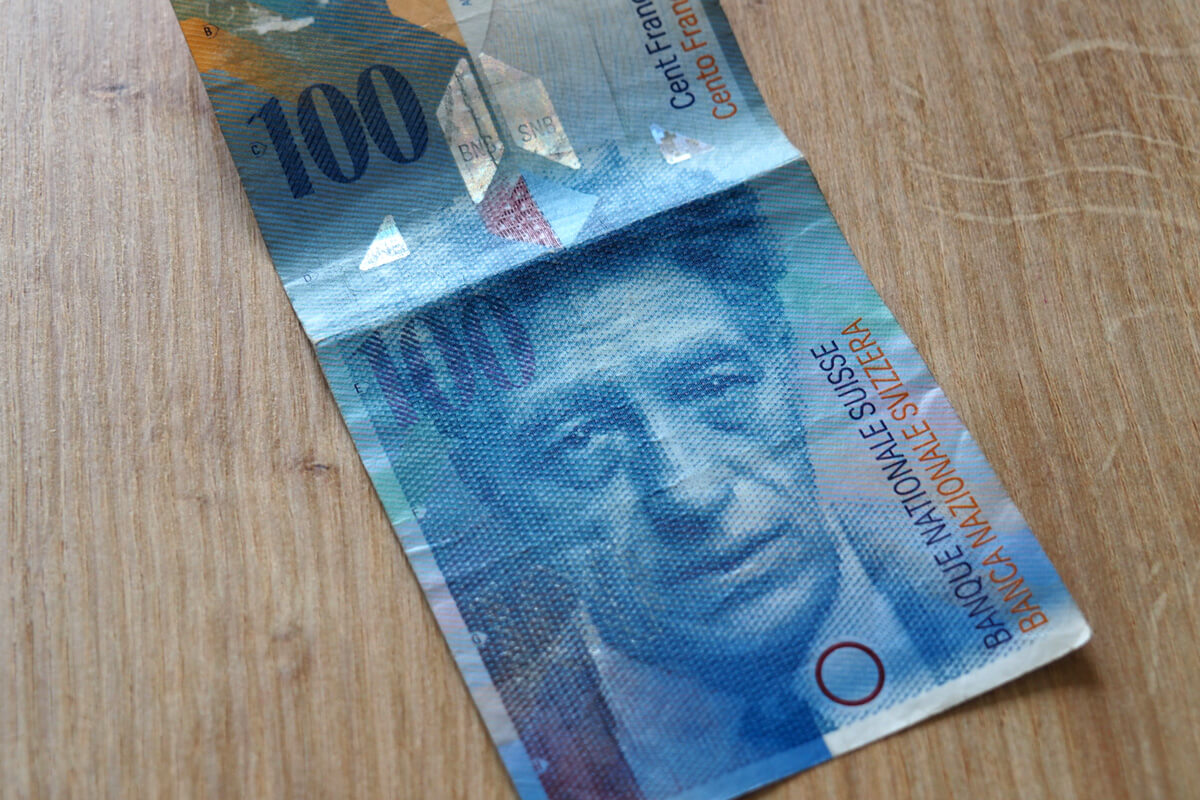
  3. Perforations shaped like numbers and crosses punched through the paper. Hold a note up to light and you will see them
  4. A coating that transfers faint traces of color onto white paper when you rub the note
  5. Features only visible under UV or infrared light
  6. The newest bills are designed to transfer traces of color onto white paper when rubbed

Each of these features has a purpose: To make professional counterfeiting as difficult as possible, and amateur counterfeiting essentially impossible.
Swiss Bill - 100 Francs

In 2016, Most Counterfeit Notes Were Just Photocopies

Swiss authorities confiscated over 8,000 counterfeit bills and coins in 2016, with a total fake value of nearly 400,000 francs. Twelve people were convicted of counterfeiting; 95 for circulating false money.

The counterfeits were not sophisticated. Over 1,000 were simply color photocopies. The rest were made on inkjet printers. Neither technology comes close to what genuine Swiss banknote printing requires. A photocopier and an inkjet printer, as one security expert put it, "just aren't up to this job."

The Most Skilled Swiss Counterfeiter Was Caught by a Forklift

The standout case in Swiss counterfeiting history is Hans-Jürgen Kuhl, a German graphic designer whose fake dollar bills were described by the German Federal Criminal Police Office as "terrifyingly perfect."

He was not caught by security technology. He was caught in 2006 when a forklift at a dump in Cologne accidentally punctured a garbage bag and exposed his stash!

Two men were later arrested at a currency exchange in London trying to cash 37 incomplete 1,000-franc notes stolen from the Orell Füssli printing facility in Zurich. These notes had no serial numbers and were therefore immediately flagged...

The judge sentencing Kuhl to six years in prison also praised him as an "extraordinary graphic artist." Kuhl's own view on counterfeiting Swiss notes: The silver hologram alone is only 1.5 centimeters wide, which makes it "ridiculous" to even attempt. The real obstacle is not any single feature but the sheer density of features working together.

Swiss Banknotes Are a National "Calling Card"

The 1,000-franc note is the second most valuable banknote in active circulation anywhere in the world, behind only the Brunei 10,000-dollar note. Around 60% of all Swiss franc banknotes by value are 1,000-franc notes. A million francs in those purple notes weighs one kilogram and fits into a one-liter Tetra Pak carton.

One brand expert from Accent Brand Consultants explained the deeper purpose of all this investment in design and security: "As a well-known financial center, our banknotes are an excellent opportunity to demonstrate our global presence, and are an expression of our pride."

Wait, Can Swiss Banknotes Be Counterfeited?!?

Yes, they can. In 2016, Swiss authorities confiscated over 8,000 counterfeit bills and coins with a total fake value of nearly 400,000 francs. Twelve people were convicted of counterfeiting; 95 for circulating false money.

But the fakes were super poor: Over 1,000 were simple color photocopies, the rest inkjet printouts! Neither comes close to the standards of real Swiss banknote production.

PS. Once you see the face on the new 50-franc bill, you cannot un-see it!

Face on Swiss 50 Franc Bill

FAQ: Swiss Banknotes in Depth

Dimitri Burkhard

As the founder, editor, and community manager of Newly Swissed, Dimitri owns the strategic vision. He is passionate about storytelling and is a member of Swiss Travel Communicators. Dimitri loves discovering new trends and covers architecture, design, start-ups and tourism.

5 comments

  • I liked the actual winner of the design competition! But I can see how Manuel’s design might come across as a tough too avantgarde and potentially even disturbing. Manuela’s design is obviously more conservative but still nice.

  • I quite like this new design. As for the winner, I find the grey objects on the notes feel like they don’t really belong there.

  • I’m not surprised about fact number five. Perhaps the counterfeit rate for the British pound is so is low because it’s a coin!

Dimitri Burkhard

How to Find a Flat in Zürich Fast

Get your PDF Guide! 🔍

How to Find a Flat in Zurich - eBook Guide

Download our e-book: 77 Facts about Switzerland

456 Shares
Share
Tweet35
Share346
Pin75
WhatsApp